
 By
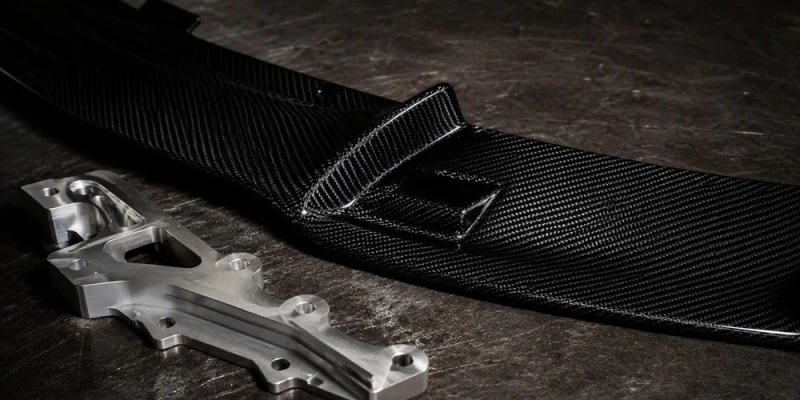
Honesty from the factory floor: sometimes the answer is metal.
We make carbon fiber parts for a living, so you might expect us to tell you carbon always wins. It does not. Aluminum is a century-refined, wonderfully behaved material, and there are jobs where it is simply the right answer. Here is the honest list, because trust is worth more than a parts sale.
1. Anything That Gets Hit and Fixed, Repeatedly
Aluminum dents. That is a feature. A door ding, a parking nudge, a dropped tool. The panel deforms, a body shop massages it back, life continues. Carbon fiber under the same abuse can crack or, worse, delaminate internally while looking unhurt. If the part lives where impacts are routine and repair shops are the plan, aluminum’s honest, visible damage beats carbon’s secret kind. The carbon fiber vs aluminum data is blunt about this difference, and the bluntness is the point.
2. Heat Management Jobs
Aluminum conducts heat at about 205 W/m·K; carbon composite manages 5 to 10. Radiators, intercoolers, oil coolers, heat exchangers of every kind, these are metal jobs, forever. Using carbon where heat needs to move is like using a blanket as a window: impressive material, wrong assignment. The same logic covers anything whose job is spreading heat away from something sensitive.
3. Tight Budgets and Hard Lives
Work trucks, winter beaters, first cars, city cars parked by braille: aluminum replacement panels cost less, tolerate neglect, and can be hammered straight by a motivated amateur with a dolly and determination. Carbon makes sense when the car is cared for and inspected. Some cars live lives that preclude that, and loving a beater means accepting what it is. There is no shame in a material that matches the mission.
4. When You Need to Weld, Bend, or Modify
Fabricators can cut, weld, and re-form aluminum with shop tools and skills that exist in every town on earth. Carbon parts are what they are when they leave the mold; modification means grinding, dust control, sealed edges, and compromised structure if you guess wrong. Need a one-off bracket at midnight before an event? Metal wins, and it is not close. If your project lives in the prototype-and-modify phase, metal is the medium. Composite parts reward people who measure twice. Our carbon fiber fabrication guide shows how much work goes into getting the mold right so you never have to improvise.
5. Ultra-High-Temperature Zones
Exhaust-adjacent panels, turbo heat shields, brake duct surroundings: aluminum keeps working where composite resins reach their 120 to 200 degree service limits. The carbon fiber itself would survive far hotter; the epoxy holding it together would not. Respect the resin’s ceiling and save the pretty parts for cooler zip codes on the car.
6. The Classic-Car Authenticity Question
One more honest case: restorations. If the goal is period-correct metalwork, matching numbers, or concours judging, then carbon has no business near the car no matter how good the numbers look. Materials carry history, and on a vintage build the right material is the one that belongs to the story. Carbon can wait outside the tent, politely, being light.
7. Track-Day Consumables and Sacrificial Parts
Serious track people know a secret: some parts are consumables wearing a disguise. Splitters that meet kerbs, brake ducts that meet gravel, undertrays that meet everything. These parts are going to die eventually, and the only question is the cost of each funeral. Aluminum and even plain plastics win here, because replacing a sacrificial part should hurt your afternoon, not your account. Save carbon for the parts the track cannot reach.
The same logic covers anything whose job description includes the phrase ‘expected to deform.’ Crash structures, crumple elements, jacking hardware. These are engineered-sacrifice jobs, and ductile metal is the honest material for them. Composites can be designed to absorb energy brilliantly, but that is race-car engineering at race-car budgets, not a Saturday project.
So Why Does Carbon Exist on Cars at All?
Because everywhere else, the math reverses. Forty-plus percent weight savings, tensile strength up to double aluminum’s at the laminate level, zero corrosion, near-zero thermal expansion. High panels, aero surfaces, designed-once structure. Carbon’s home turf is most of the car. For strike zones that need composite weight with tougher failure behavior, carbon Kevlar hybrids fill that gap as well.
And even aluminum’s wins carry an asterisk: it wins those fights partly because it is everywhere, cheap, and understood. Advantages of incumbency more than physics. Respecting the incumbent is not the same as surrendering to it. Use each material where it belongs, and the car ends up better than either one could make it alone.
The Point of the Honest List
Materials are not teams. You do not owe either one loyalty. The best builds use aluminum where it belongs, carbon where it earns, and never confuse the brochure with the answer. That is the whole secret. And the shops that tell you where their own product does not fit are usually the ones whose product fits where it should.



Comments